Magnetic LED Dance Floor: The Complete Guide for Event Rental Businesses
How magnetic RGB LED dance floors work, types, sizing, installation, ROI for rental businesses, and how to choose a supplier.
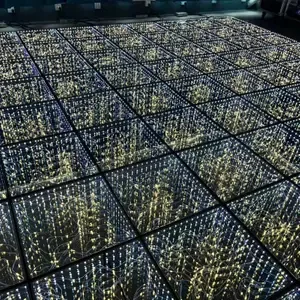
An event rental operator once told me he had stopped booking two events on the same Saturday because his wired LED dance floor took 90 minutes to set up with two people. Six months later, after switching to magnetic tiles, he was running three events per Saturday with one person per setup. The floor had not changed. The connection method had.
That is what magnetic LED dance floors do. They do not change what the floor looks like. They change how fast you can deploy it, how many events you can book, and how much labor cost stays in your pocket.
This guide covers everything you need to know about magnetic RGB LED dance floors: how the magnetic connection actually works, how they compare to wired floors, what to look for in specifications, how to size and install them, what they cost and what you can charge, and how to pick a supplier.
What Is a Magnetic LED Dance Floor?
A magnetic LED dance floor is a modular flooring system where individual RGB LED tiles connect to each other through built-in magnets along the edges. No cables. No tools. No connectors between tiles.
Each tile is a self-contained unit: an aluminum or ABS frame houses an RGB LED array, a driver board, and a tempered glass or polycarbonate top surface. When you place two tiles next to each other, the magnets pull them together and spring-loaded electrical contacts complete the power and data circuit automatically.
The result: one person can assemble a 16x16 ft dance floor in 15-20 minutes by simply snapping tiles together row by row, like laying a puzzle where every piece automatically aligns and connects.
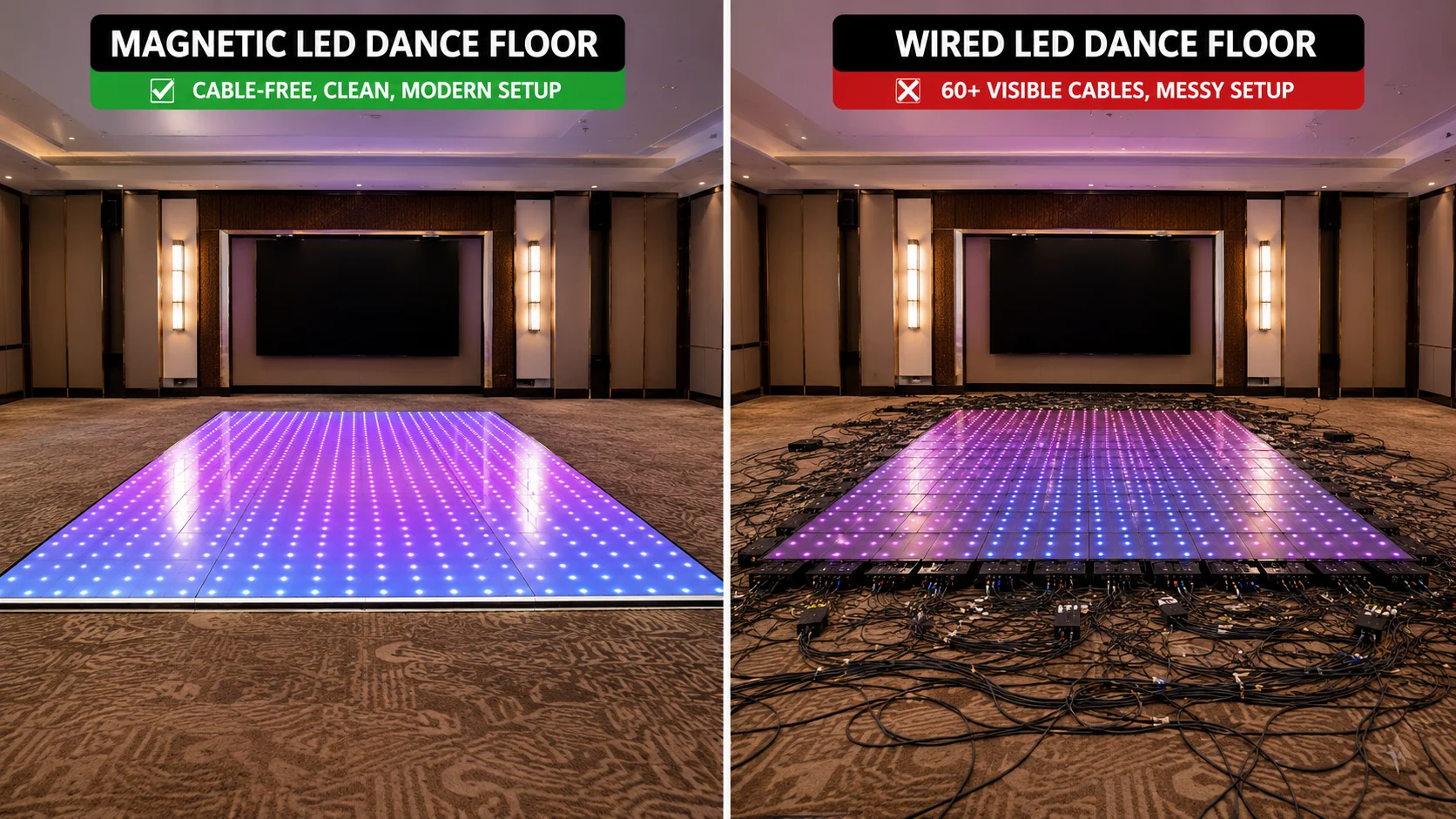
This is fundamentally different from traditional wired LED dance floors, where each tile must be connected to the next with a separate signal cable and power cable. Those cables add setup time, create trip hazards, and turn a one-person job into a two-person job.
How the Magnetic Connection Works
The magnetic connection system has three components inside each tile edge:
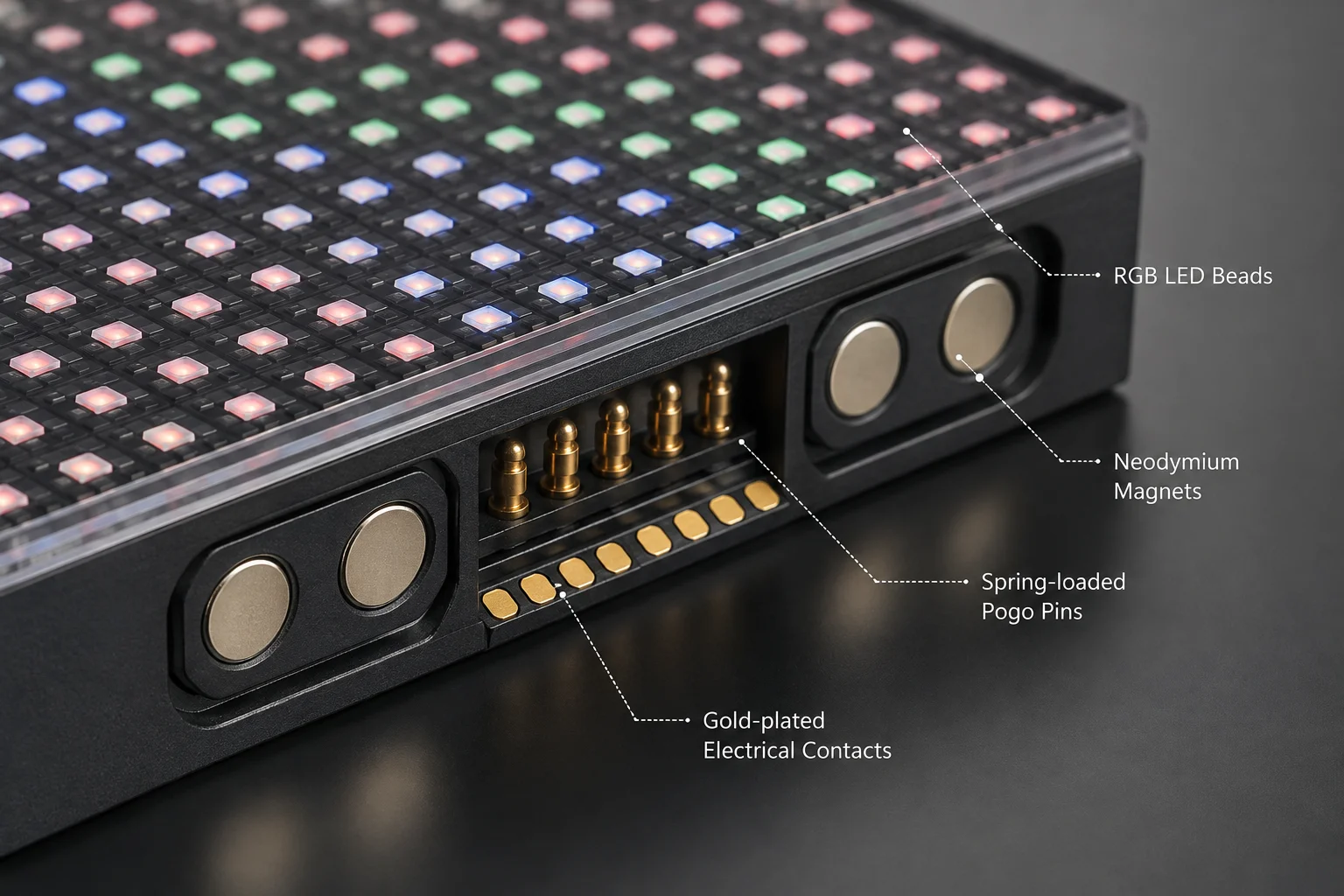
- Alignment magnets. Strong neodymium magnets pull adjacent tiles into position. The magnetic force is calibrated so tiles self-align to within 1mm tolerance without overshooting.
- Pogo pin contacts. Spring-loaded gold-plated pins make the electrical connection. Each edge has 4-8 contact points carrying power (positive and ground) and data (signal lines). The spring loading compensates for slight misalignment and thermal expansion.
- Waterproof seals. A rubber gasket around the contact area prevents water ingress at the connection point. This is how the floor achieves IP65 or IP67 ratings despite having exposed connectors at every tile edge.
When two tiles snap together, the sequence happens in under half a second: magnets engage, pogo pins compress into their contacts, the driver board detects the new neighbor, and the tile is added to the control network. A tile that is not fully connected either does not light up or lights up with reduced brightness, which makes it easy to spot during pre-event testing.
The magnetic connection is rated for 10,000+ connect/disconnect cycles, which translates to roughly 5-7 years of weekly rental use before connector wear becomes a concern. Replacement connector modules are available from most manufacturers and can be swapped without replacing the entire tile.
Fact: BiaoMing (Event Golden) manufactures magnetic RGB LED dance floors with tool-free magnetic assembly, wireless control, and IP67 waterproof rating, TÜV Rheinland certified since 2019.
Magnetic vs. Wired LED Dance Floors
If you are buying your first LED dance floor or upgrading from a wired system, here is a direct comparison across the dimensions that affect your daily operations:
| Feature | Magnetic LED Dance Floor | Wired LED Dance Floor |
|---|---|---|
| Connection method | Built-in magnets + pogo pins | External signal + power cables per tile |
| Setup time (16x16 ft) | 15-20 min, 1 person | 45-90 min, 2 people |
| Cable management | Zero cables between tiles | 60+ cables to tape down or cover |
| Trip hazard | None from cables | Significant without cable covers |
| Per-tile cost | $ 30-$ 55 (wired), $ 40-$ 70 (battery) | $ 20-$ 40 |
| Failure points | Magnetic connectors (10K+ cycles) | Cable connectors (bend/fray over time) |
| Tile replacement | Swap one tile, no recabling | Unplug old, replug all cables |
| Best for | Frequent setup/teardown, solo operators | Permanent installations, budget builds |
| Labor cost per event | ~$ 25-$ 50 (one person, 15 min) | ~$ 100-$ 200 (two people, 60+ min) |
The cost difference per tile is real, but the labor savings shift the math. If you do two events per weekend and wired setup takes an extra 45 minutes per event with an extra person at $ 25/hour, that is roughly $ 75 per weekend in additional labor, or $ 3,900 per year. Over the 5-year lifespan of the floor, the labor savings from magnetic tiles exceed the upfront price difference by a wide margin.
For permanent installations like nightclubs or event venues where the floor stays in place for months, the labor advantage of magnetic tiles matters less. But for rental operators who set up and tear down at a different venue every weekend, magnetic tiles change how many events you can book.
Key Technical Specifications
When comparing magnetic LED dance floor suppliers, these are the specifications that separate a floor that runs 200 events from one that fails on its third:
| Specification | Standard Range | What to Check |
|---|---|---|
| Tile dimensions | 50x50 cm or 60x60 cm | 60cm = fewer tiles, faster setup. 50cm = finer control over floor shape |
| Tile weight | 6-12 kg | Affects transport vehicle requirements. 64 tiles at 8 kg = 512 kg total |
| Surface material | 8-10mm tempered glass or polycarbonate | Glass: better scratch resistance. Polycarbonate: lighter, shatterproof |
| Load capacity | 500+ kg per tile | Each tile must handle several dancing adults |
| Waterproof rating | IP54 (splash) to IP67 (submersion) | IP65 minimum for events with drinks. IP67 for outdoor use |
| LED type | SMD 5050 RGB (most common) | Larger LED packages (5050) are brighter. Check lumens per tile |
| Color range | 16.7 million (24-bit RGB) | Standard across all quality tiles. Cheap tiles may use 8-bit color (256 colors) |
| LED lifespan | 50,000-100,000 hours | ~10 years of rental use |
| Power per tile | 8-20W | A 64-tile floor draws 512-1,280W, single-circuit manageable |
| Control methods | App, DMX512, PC (Madrix), RF remote, sound-activated | App is essential. DMX is a bonus for pro lighting integration |
| Connection cycle rating | 10,000+ cycles | Ask the manufacturer. Below 5,000 is a red flag for rental use |
| Magnetic strength | Neodymium N35-N52 grade | N52 provides strongest hold. Weaker magnets allow tiles to shift during dancing |
| Flight case | Custom foam-cut, 8-10 tiles per case | Foam cutouts reduce transport damage by ~80% vs. loose stacking |
Types of Magnetic LED Dance Floor Tiles
Magnetic tiles come in three main configurations, each suited to different rental business models:
Wired Magnetic (Power + Data via Magnets)
The most common type. Tiles connect magnetically to each other for both power and data. A single power cable connects one corner tile to mains power or a portable power station. The data runs through the magnetic connectors as a daisy-chain from tile to tile.
Best for: Rental businesses that do high-frequency setup/teardown at venues with reliable power access. Lowest per-tile cost among magnetic options.
Battery-Powered Magnetic
Each tile contains a built-in rechargeable lithium battery (typically 6,000 mAh). Tiles connect magnetically for data only, not power. Each tile runs independently on its own battery, with all tiles synchronized via wireless data protocols through the magnetic connectors.
Best for: Outdoor events, venues with limited power access, and operators who want to eliminate all external cabling. Per-tile cost is 20-30% higher, but zero power cables anywhere. Battery life is 8-10 hours per charge at medium brightness.
Hybrid Magnetic
Tiles have both magnetic power/data connectors and internal batteries. They can run wirelessly from batteries or connected to mains power. If the power cable disconnects mid-event, the tiles automatically switch to battery power without interruption.
Best for: High-stakes events (weddings, corporate galas) where power failure is not an option. The hybrid system provides redundancy. Highest per-tile cost.
What Size Magnetic LED Dance Floor Do You Need?
The tile count depends on guest count, event type, and venue dimensions. Here is a practical sizing reference:
| Event Type | Guests | Recommended Size | Tiles (60cm) | Tiles (50cm) |
|---|---|---|---|---|
| Birthday / small party | 30-60 | 10x10 ft | 25 | 36 |
| Anniversary / medium party | 60-100 | 12x12 ft | 36 | 49 |
| Wedding (standard) | 100-200 | 16x16 ft | 64 | 100 |
| Wedding (large) | 200-300 | 20x20 ft | 100 | 144 |
| Corporate event | 200-400 | 20x24 ft | 120 | 168 |
| Nightclub (permanent) | Varies | 16x20 ft to 24x32 ft | 80-192 | 112-256 |
| Outdoor festival stage | 500+ | 20x20 ft to 32x32 ft | 100-256 | 144-400 |
A quick way to calculate: assume 4-5 sq ft of dance floor per guest for weddings (about 40% of guests dance at any moment) and 3-4 sq ft for nightclub events. Multiply guest count by 0.4, then multiply by 4.5 sq ft. That gives you the approximate floor area needed.
Always verify the venue before quoting. The gap between the available floor space and the dance floor you sell is the most expensive measurement error in the rental business. Walk the venue with a laser measure. Account for tables, DJ booth, bar area, photo booth setup, and walking paths around the dance floor edges.
Installation and Setup Guide
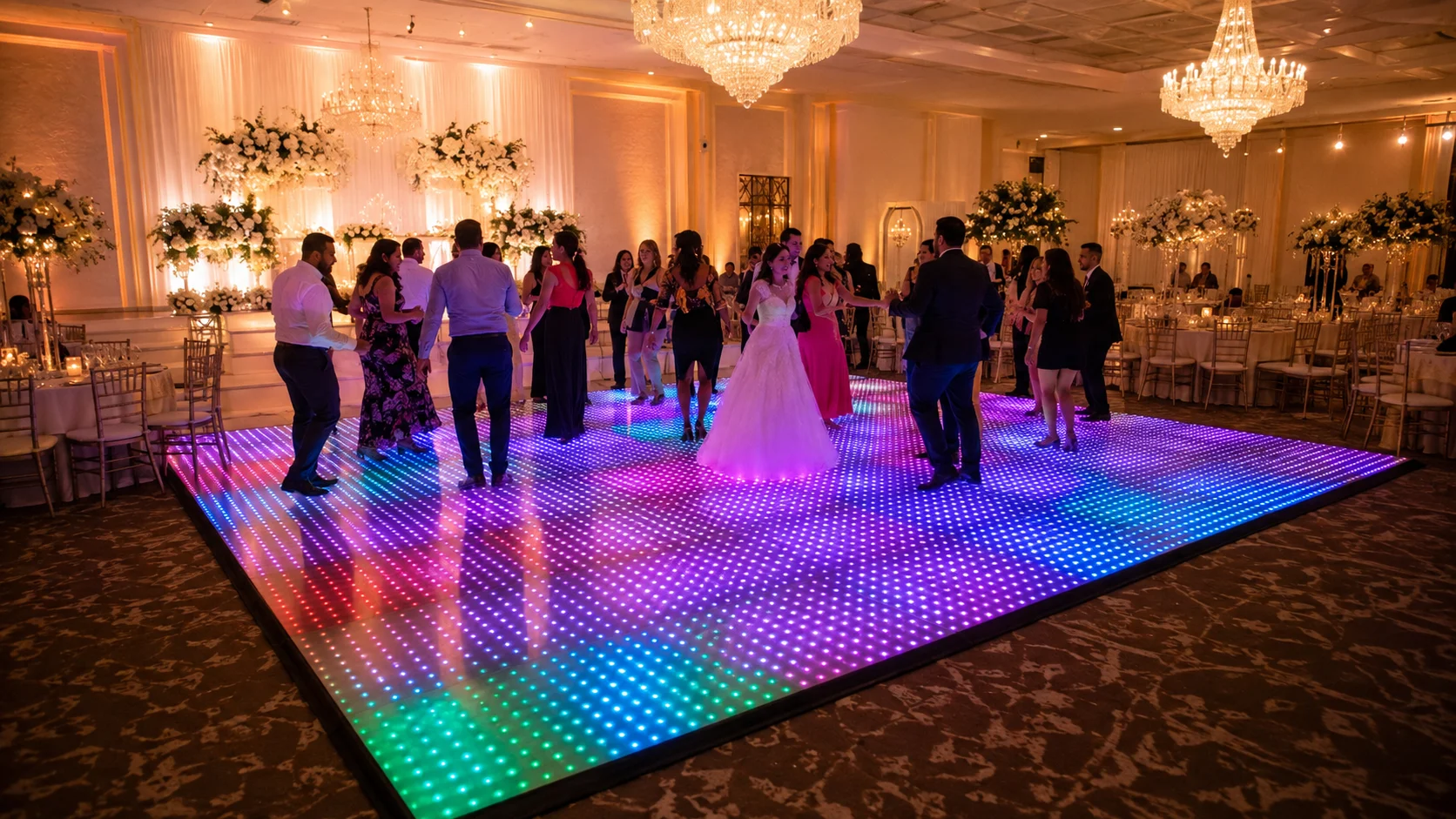
Magnetic LED dance floors are designed for one-person setup. Here is the full workflow:
Step 1: Position flight cases. Roll or carry cases near the setup area. A standard 8-tile flight case weighs roughly 80-100 kg. Use a ramp or lift gate for vehicles.
Step 2: Lay protective underlay. A thin foam or rubber mat between the venue floor and the tiles protects both surfaces and dampens noise. Some venues require this in their rental contract.
Step 3: Place the corner tile. This is the only tile connected to external power. Choose a corner closest to a power outlet. The main power/data cable plugs into this tile.
Step 4: Snap tiles row by row. Place each new tile next to an existing one. The magnets pull them together. You will hear a click. That is the pogo pins engaging and the tile joining the control network. Work row by row or column by column, whichever feels natural.
Step 5: Attach edge trim. Magnetic edge pieces snap onto the exposed sides of perimeter tiles. These cover the connector edges and give the floor a finished look. They also prevent guests from kicking the tile edges.
Step 6: Connect power and controller. Plug the main cable into a power outlet. Connect the control box or tablet. Power on and test all tiles with a full-color cycle.
Step 7: Final check. Walk the perimeter. Look for misaligned tiles (a gap wider than 1mm means the magnets did not fully engage). Press down on any suspect tiles. Run a pattern across the entire floor and verify every tile is illuminated.
Total time: 15-20 minutes for a 16x16 ft floor, one person. Breakdown is faster, 10-12 minutes. Tiles separate by lifting straight up. The magnets release when the lifting force exceeds their holding strength.
Fact: BiaoMing exports magnetic LED dance floors to over 200 countries, with North America accounting for 55% of sales and Western Europe 17%.
Control Methods
Magnetic LED dance floors offer the same control flexibility as other LED floor types. Here is what each method delivers:
| Control Method | Setup | What You Can Do | Best For |
|---|---|---|---|
| Mobile App (iOS/Android) | Download, pair via Bluetooth/WiFi | Select patterns, change colors, adjust brightness, schedule color sequences | 80% of rental events |
| DMX512 | DMX cable to lighting console | Full integration with professional lighting rigs | Theater, concert, synchronized shows |
| PC Software (Madrix, LED Edit) | USB or network connection | Custom animations, import logos, pixel-map complex designs | Corporate branding events |
| RF Remote Control | Pre-paired out of the box | On/off, cycle presets, basic color selection | Backup control, quick checks |
| Sound-Activated Mode | No setup needed | Floor pulses and changes color with music | DJ events, nightclubs |
Most operators ship the remote control as the default and use the app for daily operation. The PC software is a premium upsell for corporate clients who want their logo or custom animations on the floor.
ROI for Rental Businesses
A magnetic LED dance floor is one of the fastest-returning equipment investments in event rental. The labor savings from magnetic setup magnify the return.
Purchase cost for 16x16 ft (64 tiles, 60cm):
- 64 tiles at $ 40/tile = $ 2,560
- Control system and cables = $ 250
- 8 flight cases = $ 640
- Total: ~$ 3,450
Per-event revenue:
- Base rental (4 hours, delivery included): $ 1,000-$ 1,800
- Custom color programming add-on: $ 150-$ 300
- Delivery and setup fee: $ 150-$ 250
- Typical per event: $ 1,300-$ 2,200
Industry data shows rental companies in North America charge $ 2,500 to $ 5,000 per event for a 16x16 ft LED dance floor (Beyond Tent, 2025), with magnetic/wireless floors commanding the upper end of that range.
ROI timeline:
- 4 events/month at $ 1,500 average = $ 6,000/month
- Equipment cost recovered in under 1 month (3 events)
- Conservative: 6-10 events for full ROI
Labor savings vs. wired floor:
- Wired setup: 2 people × 60 min = 2 labor hours per event
- Magnetic setup: 1 person × 15 min = 0.25 labor hours per event
- Savings: 1.75 hours × $ 25/hour = ~$ 44 per event
- At 4 events/month × 12 months = $ 2,100 saved per year in labor alone
Bundling strategy:
| Package | Includes | Price |
|---|---|---|
| Basic | Magnetic LED floor 16x16 ft, standard patterns | $ 1,500 |
| Premium | Magnetic LED floor + 3D LED Dance Floor 10x10 ft accent area | $ 3,200 |
| Ultimate | Magnetic LED floor + 360 Photo Booth + Mirror Photo Booth | $ 4,800 |
Magnetic RGB vs. 3D LED Dance Floors
Since rental operators often consider both, here is how the two main BiaoMing LED dance floor types compare:
| Feature | Magnetic RGB LED Dance Floor | 3D LED Dance Floor |
|---|---|---|
| Visual effect | Flat RGB surface with patterns and animations | Infinite depth illusion via mirror layer |
| Per-tile weight | 6-12 kg | 11-14 kg |
| Per-tile cost | $ 30-$ 55 | $ 40-$ 70 |
| Rental rate (16x16 ft) | $ 1,000-$ 1,800 | $ 1,500-$ 3,500 |
| Best for | Budget packages, kids' parties, casual events, large-area coverage | Weddings, corporate galas, luxury events, nightclubs |
| Transport weight (64 tiles) | ~500 kg | ~900 kg |
| Setup speed | Same (both magnetic) | Same (both magnetic) |
| Photogenic | Good, reads as bright lit surface | Excellent, depth illusion photographs well |
The two products are complementary, not competing. Use magnetic RGB for budget packages and large-area coverage. Upsell 3D for luxury events and the main dance area at high-end weddings. Many operators stock both and let the client choose based on budget and event type.
Fact: BiaoMing provides a 5-year warranty on magnetic LED dance floor systems with 20+ overseas warehouses for fast spare parts and local delivery.
Maintenance
Magnetic LED dance floors require minimal maintenance compared to wired floors, because there are no cables to fray, tangle, or lose. Here is the maintenance schedule:
After every event:
- Wipe tiles with a microfiber cloth (50% water, 50% isopropyl alcohol)
- Inspect the main power cable for cuts or exposed wire. This is your single point of failure
- Check for cracked or chipped glass on any tile. Replace before the next event
Monthly:
- Clean magnetic connector surfaces with a dry brush or compressed air. Debris in the connector can cause a tile to flicker or fail to connect
- Run a full-color cycle across the entire floor and flag any tile with dead LED zones
- Test all flight case latches and wheels
Quarterly:
- Update control software and firmware
- Cycle battery-powered tiles through a full discharge and recharge
- Inspect edge trim pieces for bent or broken magnetic tabs
Storage:
- Store tiles flat in their foam-cut flight cases, never stacked loose
- Keep in a dry, climate-controlled space. Humidity corrodes pogo pin contacts over time
- Store flight cases on pallet racking, not directly on concrete
The most common failure points, in order: damaged main power cable (preventable, keep a spare in each case), dirty magnetic connectors (preventable, regular cleaning), edge trim magnetic tabs breaking (inevitable with heavy use, keep spares), and dead LED driver boards (rare, replaceable per tile).
Frequently Asked Questions
What is a magnetic LED dance floor?
A magnetic LED dance floor is a modular floor system where individual RGB LED tiles connect via built-in magnets rather than cables. Each tile contains its own LED array and snaps to adjacent tiles with an audible click. The magnetic connectors carry both power and data, so no cables run between tiles. A single person can assemble a full dance floor in 15-20 minutes.
How does the magnetic connection work?
Each tile has magnetic connectors embedded along all four edges. When two tiles are placed next to each other, the magnets pull them into precise alignment. The connectors are spring-loaded pogo pins that make electrical contact for power and data transfer. This design eliminates external cables between tiles and allows quick assembly and disassembly without tools.
What is the difference between magnetic and wired LED dance floors?
Wired LED dance floors require each tile to be connected with a cable carrying power and data. Setup takes 45-90 minutes with two people, and cables create trip hazards that need to be taped down or covered. Magnetic floors eliminate all inter-panel cables. Setup takes 15-20 minutes with one person, and the floor surface is clean with no visible cables. Magnetic floors typically cost 15-25% more per tile but reduce labor costs significantly.
How many colors can a magnetic RGB LED dance floor display?
Each LED bead in the tile is an RGB (red, green, blue) unit capable of producing 16.7 million colors by mixing the three primary colors at different intensities. The control system allows for static colors, color cycling, pattern animations, and custom-programmed sequences. Most systems include 20-50 preset patterns out of the box.
What size magnetic LED dance floor do I need?
For small parties (30-60 guests), a 10x10 ft floor (25-36 tiles) works well. Standard weddings (100-200 guests) typically use 16x16 ft (64 tiles at 60cm). Large events (200+ guests) need 20x20 ft or larger (100+ tiles). Allow roughly 4-5 sq ft per guest for weddings and 3-4 sq ft per guest for nightclub events.
How durable is a magnetic LED dance floor?
Magnetic LED dance floor tiles use 8-10mm tempered glass or polycarbonate top surfaces rated for 500+ kg per tile. The aluminum or ABS frame protects the internal electronics from impact. Most models carry IP54 or higher waterproof ratings, protecting against spilled drinks and light rain. LED modules are rated for 50,000 hours minimum.
Can I use a magnetic LED dance floor outdoors?
Yes, if the tiles have an IP65 or IP67 waterproof rating. Check the manufacturer specifications. Even waterproof tiles should not be submerged or left in standing water. The control box and main power connection need to be kept dry and are typically rated IP54. Wind can blow lightweight edge trim pieces, so outdoor setups may need additional securing.
How much does a magnetic LED dance floor cost?
A complete 16x16 ft magnetic LED dance floor system costs approximately $ 2,500-$ 4,500. Per-tile pricing ranges from $ 30-$ 55 for wired versions and $ 40-$ 70 for battery-powered versions. A full system includes tiles, a control box, remote control or app access, edge trim pieces, and flight cases for transport.
How long does a magnetic LED dance floor last?
With proper maintenance, a magnetic LED dance floor lasts 5-10 years in rental service. LED modules are rated for 50,000 hours. The magnetic connectors are rated for 10,000+ connection cycles. Common wear items include edge trim pieces (replaceable), the main power cable (replace every 2-3 years), and battery packs on battery models (replace every 3-5 years).
How to Choose a Magnetic LED Dance Floor Supplier
The magnetic connector is the defining feature of this floor type, and it is also the component most likely to fail if poorly manufactured. Here is what separates quality suppliers from the rest:
Connector quality. Ask the supplier for the connector cycle rating. 10,000+ cycles is standard for rental-grade floors. Below 5,000 is a red flag. Also ask whether the pogo pins are gold-plated (corrosion-resistant) or bare metal (will oxidize over time).
Magnet grade. Neodymium magnets come in grades from N35 to N52. Higher grades provide stronger hold. If tiles shift during dancing or develop gaps during an event, the magnets are too weak. N42 is the minimum acceptable grade for a rental floor. N52 is what you want.
Waterproofing at the connector. The magnetic connector edge is the hardest point to waterproof. Quality tiles have a rubber gasket seal around each connector block. Cheap tiles rely on tight manufacturing tolerances alone, which degrade with wear. Look for an IP65 or IP67 rating that covers the entire tile, including the connector edges.
Glass thickness and type. 8mm is the minimum. 10mm is standard for rental-grade floors. Ask whether the glass is thermally tempered (stronger, breaks into small cubes if shattered) or chemically strengthened (thinner, lighter but can crack into sharp shards).
Spare parts availability. You will eventually need a replacement tile, edge piece, or power cable. Can the supplier ship spares from a warehouse in your region within a week, or will you wait six weeks for a container? This question alone eliminates most Alibaba-only suppliers from consideration for serious rental operators.
BiaoMing (Event Golden), a Zhengzhou-based manufacturer with 13 years of production experience, produces magnetic LED dance floors with N52-grade neodymium connectors, 10mm tempered glass, and IP67 waterproofing. The company holds TÜV Rheinland on-site certification with CE, RoHS, FCC, LVD, and CB product certifications. Inventory is stocked across 20+ overseas warehouses with a 5-year warranty and lifetime technical support.
Next Steps
Magnetic LED dance floors do not change what your floor looks like. They change how many events you can book, how many people you need to send, and how fast you can pack up and leave. For rental operators doing more than one event per weekend, magnetic tiles pay for the price difference over wired tiles within the first year through labor savings alone.
To explore magnetic LED dance floor options for your rental fleet, including wired, battery-powered, and hybrid configurations, visit the BiaoMing LED Dance Floor product page or contact the team for a quote with shipping options from a warehouse near your region.
Browse related equipment: 3D LED Dance Floor | 360 Photo Booth | Mirror Photo Booth | iPad Photo Booth
Sources
- Beyond Tent. "Should Your Venue or Party Rental Business Invest in an LED Dance Floor?" (2025). beyondtent.com, Industry-reported LED dance floor rental rates: $ 2,500-$ 5,000 per event for a 16x16 ft floor.
Ready to start your event business?
Get a free wholesale quote within 24 hours. Product details are confirmed by direct inquiry.
Get a Free Quote