LED Dance Floor ROI: A Complete Guide for Event Rental Businesses
What an LED dance floor costs, what it rents for, and how many events it takes to pay back. Full ROI math and payback timeline for rental businesses.
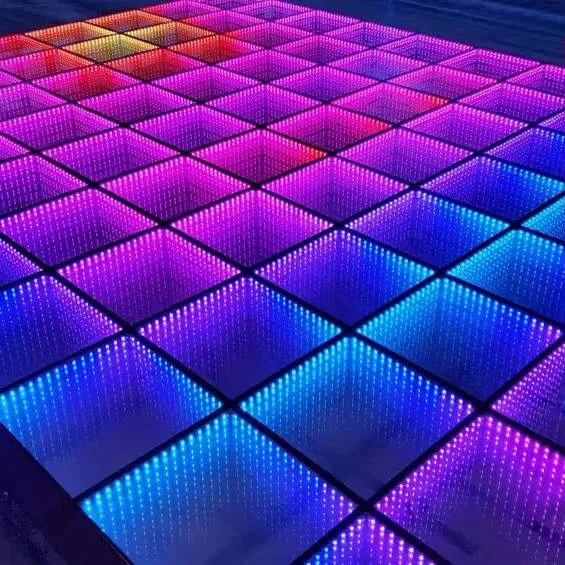
Most rental operators can quote the price of an LED dance floor to the dollar. Almost none of them can tell you how many events it takes to pay for itself. That second number is the one that decides whether the purchase is smart.
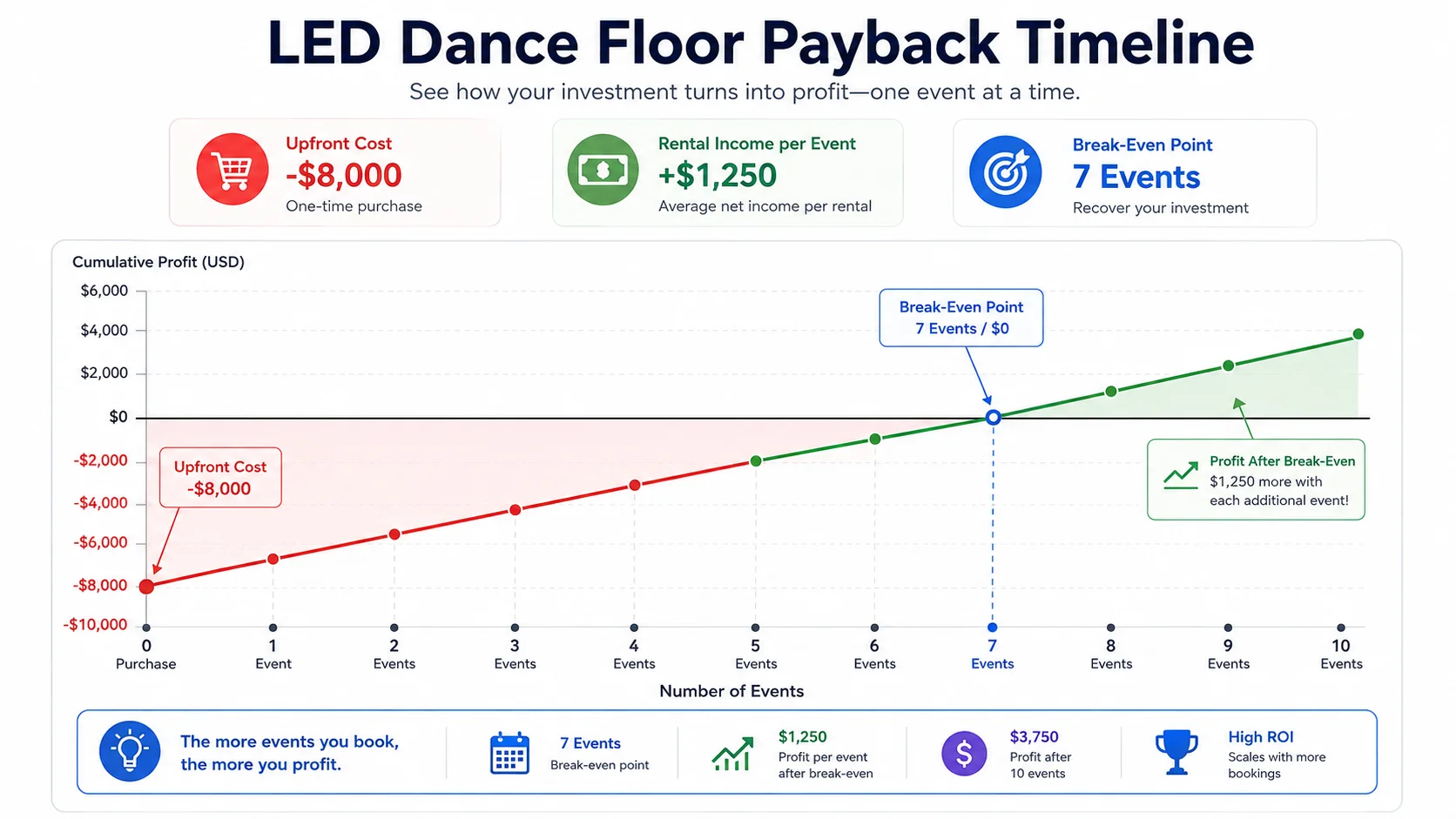
The LED dance floor ROI math is short and favorable, which is why floors are usually the fastest-paying asset in an event rental fleet. A $ 3,500 floor that clears $ 1,000 per event pays for itself in four bookings. After that, it is mostly labor and fuel between you and the margin.
This guide runs the full math: what a floor costs, what it rents for, how fast it pays back, which type pays back fastest, and the hidden costs that eat into the number.
What an LED Dance Floor Costs to Buy
The entry cost depends on floor type and size, but the working number most operators plan around is a 16x16 ft system.
A magnetic RGB system runs $ 2,500-$ 4,500 complete, with individual tiles at $ 30-$ 55 for wired versions and $ 40-$ 70 for battery versions. That includes the tiles, control box, edge trim, and flight cases. It is the cheapest way to enter the category.
Star floors cost more. The higher LED point density and more advanced control hardware push the price above standard RGB for the same size, which is why they command a 20-30% rental premium. A 3D abyss floor is the most expensive of the three, reflecting the mirror-and-glass construction that creates the depth effect.
The purchase decision is not just about price. It is about which floor matches the events you book, which is covered in our 3D vs star vs magnetic comparison. For ROI purposes, what matters is that you are buying an asset with a short payback, not a cost sink.
Fact: BiaoMing (Event Golden) manufactures magnetic RGB, star, and 3D abyss LED dance floors with tool-free magnetic assembly, IP67 waterproofing, and TÜV Rheinland certification.
Rental Rates and Revenue per Event
What you can charge depends on your market and the floor type. These are industry estimates, not guarantees, and they vary by city.
Standard RGB floors rent for $ 800-$ 1,500 per event. Star floors sit higher, at $ 1,200-$ 2,500, because the twinkling effect photographs well and couples pay for it at weddings. 3D abyss floors sit at or above the star range for premium nightclub and brand work.
Add-ons move the number further. Custom pattern programming, synchronized lighting, or a monogram projected on the floor can add $ 200-$ 400 per event. A floor that anchors a wedding or corporate room is rarely sold alone; it is the visual centerpiece that justifies the upsell.
The useful framing is contribution per event, not headline price. If a floor rents for $ 1,200 and costs $ 150-$ 250 in labor, fuel, and wear, the floor contributes roughly $ 950-$ 1,050 per event. That contribution is what pays off the purchase and, later, becomes profit.
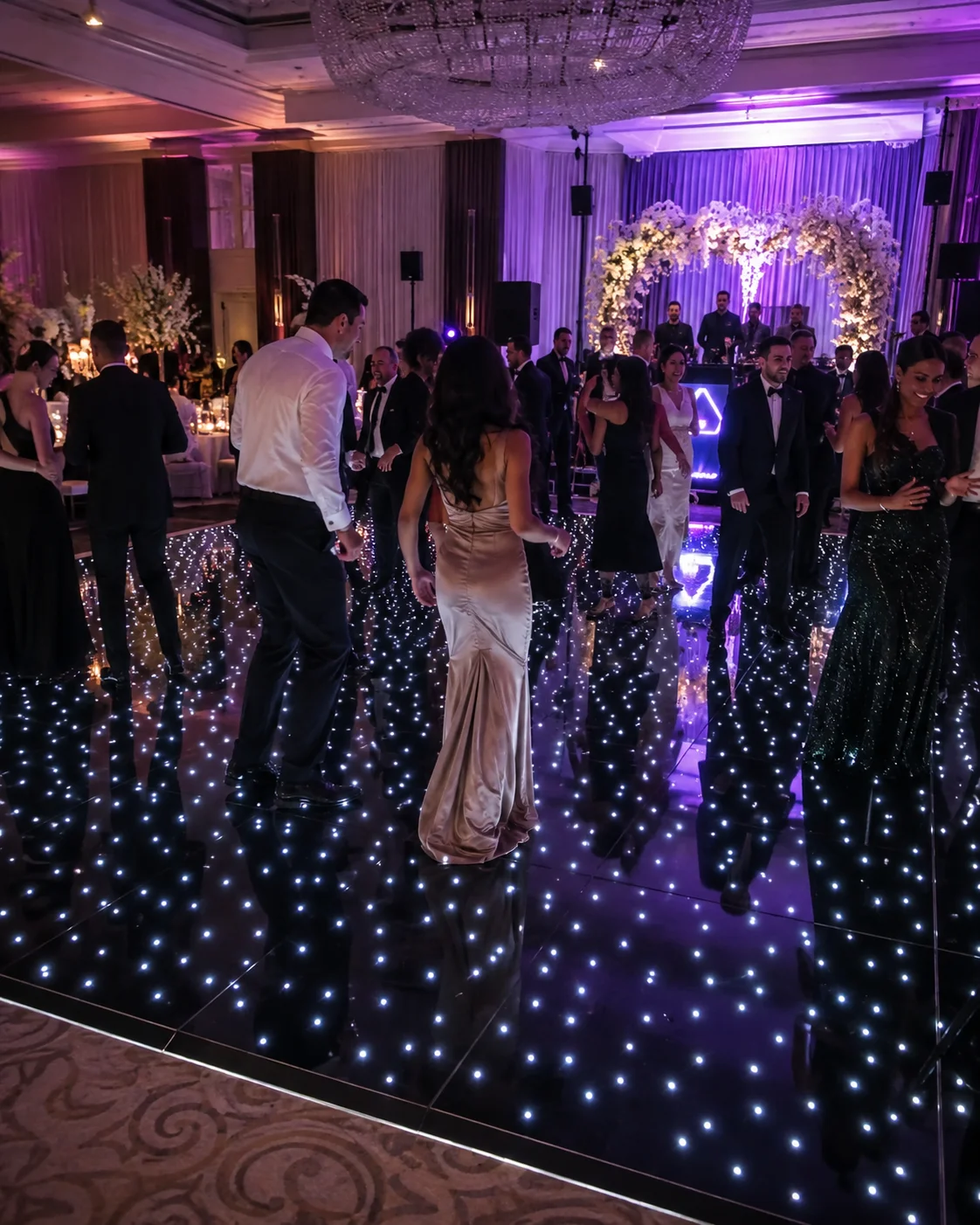
For a breakdown of what each floor type earns, see the star LED dance floor guide and the magnetic LED dance floor guide.
The ROI Math: Payback Timeline
The core equation is simple: purchase cost divided by contribution per event equals the number of events to break even.
Take a magnetic RGB floor at $ 3,500. If it clears $ 1,000 per event after variable costs, it pays for itself in 3-4 events. A more conservative operator clearing $ 650 per event needs 5-6 events. Either way, the payback lands within a single busy month for an operator running multiple events per weekend.
Star floors pay back over a longer horizon, typically 8-15 events, because the purchase price is higher even though the per-event contribution is also higher. The tradeoff is clear: the volume floor pays back fastest, while the premium floor earns more per event but takes longer to recover its cost.
| Floor type | Typical purchase (16x16 ft) | Typical rental | Contribution per event | Payback |
|---|---|---|---|---|
| Magnetic RGB | $ 2,500-$ 4,500 | $ 800-$ 1,500 | $ 650-$ 1,300 | 3-7 events |
| Star | Higher than RGB (industry estimate) | $ 1,200-$ 2,500 | $ 1,050-$ 2,300 | 8-15 events |
| 3D Abyss | Highest (industry estimate) | $ 1,300-$ 2,500+ | $ 1,150-$ 2,300+ | Varies by market |
These numbers are directional. Your local labor rates, travel distance, and pricing ceiling shift every figure. The point is the shape of the curve: cost is recovered early, then the asset prints margin.
Setup Speed: The Overlooked Revenue Lever
The number most ROI discussions skip is setup time, and it is often the difference between a good month and a great one.
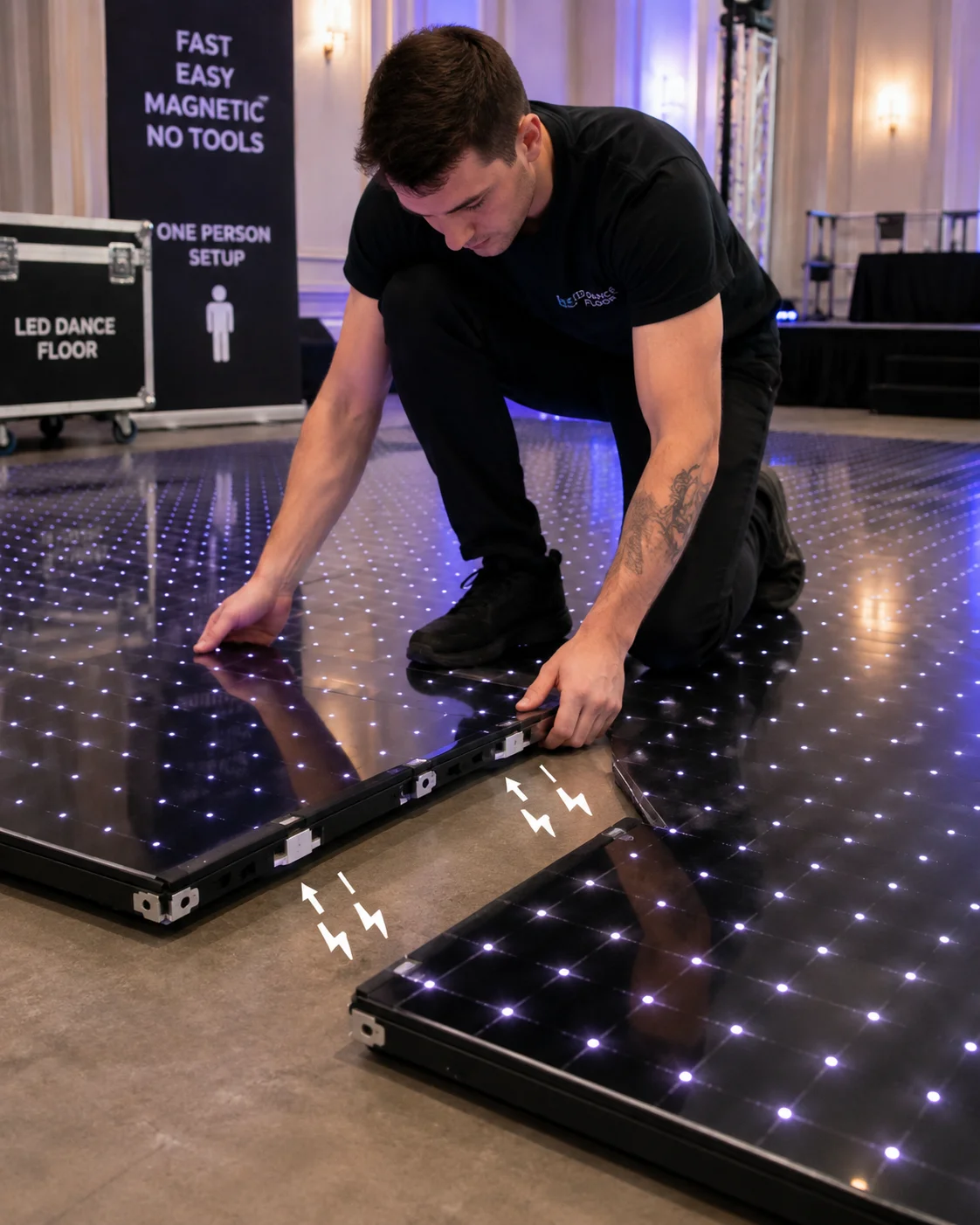
A magnetic floor assembles with one person in 15-20 minutes for a 16x16 ft layout. A wired floor takes 45-90 minutes with two people and leaves cable trip hazards to manage. That is not a minor inconvenience. It is a ceiling on how many events you can run.
If a wired floor caps you at two events per Saturday, a magnetic floor opens a third. Across a month of weekends, that is four to eight more events, each worth $ 650-$ 1,300 in contribution. The setup-speed advantage alone can recover the 15-25% premium you pay for magnetic tiles within a single busy season.
This is why the volume floor is so often the right first purchase. It does not just pay for itself on price. It pays for itself by multiplying your capacity.
Which Floor Type Pays Back Fastest
If payback speed is the only criterion, the magnetic RGB floor wins. It has the lowest purchase price and the fastest setup, which together mean the shortest path to break even.
That does not make it the best floor for everyone. A wedding-focused operator may prefer the star floor, accepting a longer payback in exchange for higher per-event pricing and a steadier stream of premium bookings. A nightclub-market operator may accept the 3D abyss cost because it unlocks contracts the volume floor cannot.
The right question is not "which pays back fastest" but "which pays back fastest given the events I actually book." The comparison is laid out in the 3D vs star vs magnetic guide. For ROI, the answer follows your event mix, not a spec sheet.
Hidden Costs: Transport, Power, Space, and Maintenance
The sticker price is not the whole cost, and the operators who lose money on floors usually lose it to the costs they did not plan for.
Transport is the biggest one. Flight cases are heavy, and a 16x16 ft floor needs a vehicle that can move them. Figure fuel and vehicle wear into every event, or the contribution per event is fiction.
Keep a spare tile or two. A cracked glass panel or a dead LED module is a matter of when, not if, and a spare means you never cancel a booking over a single failed tile. Edge trim pieces are the most common wear item and should be treated as consumable.
Power and control hardware are easy to overlook. You need a reliable control device, spare power cables, and a plan for venues with limited outlets. Outdoor use means more cleaning and weather-related wear, and the control box and main power connection must stay dry.
A realistic maintenance and transport budget is $ 50-$ 100 per event combined. Plan for it, and the contribution numbers above hold. Ignore it, and the payback stretches by a third.
Bundling and Upsell Strategies
A floor sold alone leaves money on the table. Bundled, it becomes the anchor of a higher-ticket package.
The most common pairing is the floor plus a photo booth. The floor anchors the dance area while the booth handles the guest keepsakes, and together they bill $ 2,000-$ 4,000 with one crew and one vehicle. Uplighting and monogram projection ride along for another $ 200-$ 400.
Bundling also smooths your schedule. A floor-only booking has gaps; a package that includes the floor, a booth, and lighting keeps the crew busy and the revenue per event high. The floor is the visual reason the client says yes, which is exactly the role a high-margin asset should play.
Fact: BiaoMing exports LED dance floors to over 200 countries, with North America at 55% of sales and Western Europe at 17%, and provides a 5-year warranty backed by 20+ overseas warehouses.
FAQ
How much does an LED dance floor cost to buy?
A complete 16x16 ft magnetic RGB LED dance floor system typically runs $ 2,500-$ 4,500, with individual tiles from $ 30-$ 55 for wired versions and $ 40-$ 70 for battery versions. Star floors cost more, reflecting their higher LED point density and advanced control, and 3D abyss floors are the most expensive of the three. These are system prices including tiles, control box, edge trim, and flight cases.
How much can I charge to rent an LED dance floor?
Standard RGB LED dance floors typically rent for $ 800-$ 1,500 per event. Star floors rent for $ 1,200-$ 2,500 per event, reflecting their 20-30% premium over standard RGB, and 3D abyss floors sit at or above the star range for premium events. Add-ons like custom patterns or synchronized lighting can add $ 200-$ 400 per event.
How long does it take to pay off an LED dance floor?
A magnetic RGB floor at $ 3,500 with a per-event profit around $ 1,000 pays for itself in roughly 3-4 events, and more conservatively in 5-7 events. Star floors, with higher purchase prices, typically pay off in 8-15 events, according to the rental rates they command. For a busy operator running multiple events per weekend, that can mean one to two months for the volume floor.
Is an LED dance floor a good investment for a rental business?
For most event rental businesses, yes, because the payback is short and the asset lasts years. LED modules are rated for 50,000 hours and magnetic connectors for 10,000+ cycles, which translates to 5-7 years of weekly rental use. After the floor pays for itself, the ongoing cost is mostly labor and transport, so the floor becomes a high-margin asset.
What is the profit margin on an LED dance floor rental?
Gross margin per event typically runs 70-85% once the floor is paid off, because the main variable costs are labor, transport, and minor maintenance. On a $ 1,200 rental, roughly $ 150-$ 250 goes to crew time, vehicle cost, and wear, leaving $ 950-$ 1,050 as contribution. The exact number depends on your local labor rates and how far you travel.
How many events can an LED dance floor run per month?
A magnetic floor can run 3-4 events per weekend with one-person setup, or 12-16 events per month at full utilization. A wired floor realistically caps around 2 events per weekend because setup takes 45-90 minutes with two people. That setup-speed difference is often the real ceiling on revenue, not demand.
What are the hidden costs of running an LED dance floor?
Beyond the purchase price, budget for flight cases and transport, a spare tile or two, edge trim replacement, a dedicated control device, and occasional power or connector maintenance. Outdoor use means more frequent cleaning and possible weather-related wear. Most operators set aside $ 50-$ 100 per event for transport and maintenance combined.
Can I bundle an LED dance floor with photo booths or lighting?
Yes, and bundling raises the average ticket. An LED dance floor paired with a photo booth or uplighting package commonly bills $ 2,000-$ 4,000 as a combined package, sharing one crew and one vehicle. The floor becomes the visual anchor of the room and the upsell that lifts the whole event's price.
Conclusion
The LED dance floor ROI is one of the shortest in the event rental business. A $ 3,500 volume floor clears its cost in four bookings, and a premium floor pays off within a season. After that, the floor is a margin machine for the next five to seven years.
The decision that matters is not whether a floor pays back. It is which floor pays back fastest given the events you book, and whether you have planned for the transport, spare parts, and setup time that decide the real number.
Explore the full BiaoMing LED dance floor range to compare systems and run your own payback math with a quote.
Sources
- BiaoMing (Event Golden). "LED Dance Floor." Event Golden product page. https://eventgolden.com/products/led-dance-floor/: Manufacturer technical specifications and system configuration. Purchase price ranges and payback figures marked "typical" are industry estimates, not manufacturer quotes.
- Epic Experiences SoCal. "LED Dance Floor Rental." https://www.epicexperiencessocal.com/: Published rental listing for 20x20 ft LED dance floors, used as a reference for rental-rate ranges.
- NY LED Furniture. "Lighted Dance Floor Rentals." https://www.nyledfurniture.com/: Published LED dance floor rental pricing for event planners.
- Nite Time Events. "LED Video Dance Floor for Your Event." https://nitetimeevents.com/: Published LED dance floor rental offering for weddings and parties.
- LED Party Floors. "LED Party Floors - Home." https://ledpartyfloors.com/: LED dance floor rentals and permanent installations, illustrating the rental-price tiers referenced above.
Note: The ROI calculations in this guide are illustrative. They combine the purchase-price and rental-rate anchors above with stated assumptions for labor, transport, and maintenance. Actual payback depends on local pricing and operating costs.
Ready to start your event business?
Get a free wholesale quote within 24 hours. Product details are confirmed by direct inquiry.
Get a Free Quote